
Call Us Now
Common Challenges in Commercial Glass Fabrication (And How They’re Managed)
In commercial glass projects, challenges rarely come from a single issue. They tend to emerge where planning, coordination, and fabrication meet real-world constraints. As a result, OEMs, designers, and manufacturers across Ontario benefit from understanding these common challenges, since it helps teams anticipate pressure points early and manage fabrication more effectively as projects move forward.
When Requirements Evolve Mid-Process
One of the most common challenges in commercial glass fabrication is change. Revisions to dimensions, layouts, or system coordination can surface after fabrication planning has already begun. When this occurs, fabrication workflows often pause while teams review updates and adjust sequencing. However, early alignment and clear documentation help reduce the impact of revisions, even when changes are unavoidable.
Managing Complexity Across Multiple Panels
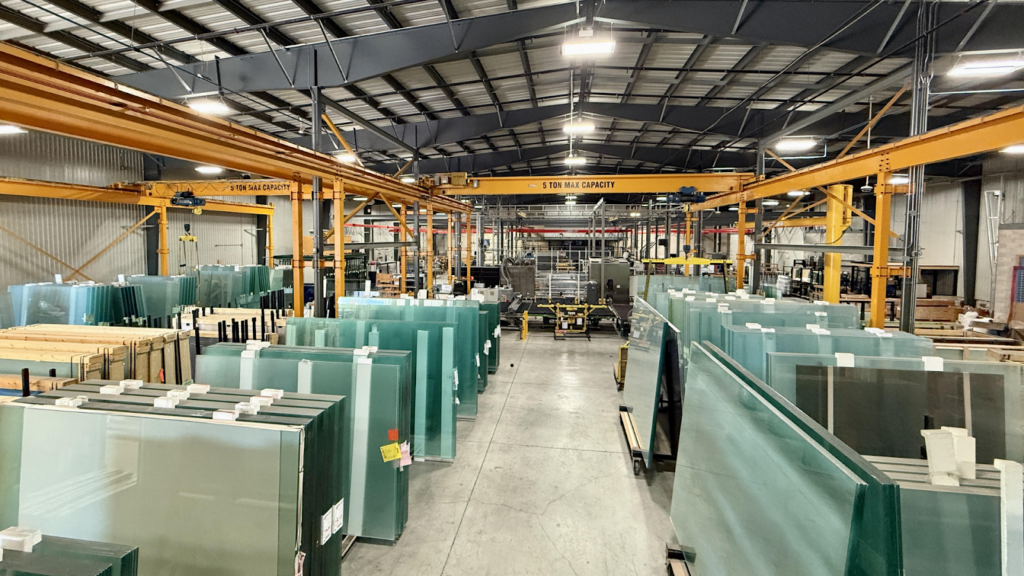
As projects scale, fabrication complexity tends to increase. Multiple panel sizes, cutouts, and processing requirements must be coordinated to ensure consistency across assemblies.
Without structured fabrication planning, this complexity can introduce handling challenges and workflow bottlenecks. Careful sequencing and batching help maintain momentum and reduce unnecessary rework.
Balancing Schedules Across Trades
In Ontario commercial projects, glass fabrication rarely exists in isolation. It must align with framing, mechanical, electrical, and finishing schedules.
When fabrication timelines are not clearly understood by the broader project team, pressure can build late in the schedule. Early communication helps ensure fabrication supports the overall construction sequence rather than competing with it.
In Canadian commercial construction environments, coordination across trades is critical to maintaining schedule stability.
Taken together, these challenges highlight an important reality: fabrication outcomes are shaped by coordination and planning as much as by production itself.
When challenges are anticipated early, they can often be managed without disrupting the broader project timeline.
Final Thoughts
Commercial glass fabrication involves navigating changing requirements, complex assemblies, and multi-trade coordination. While challenges are part of the process, understanding where they typically arise allows project teams to plan with greater clarity and resilience.
For Ontario-based projects, this awareness supports steadier execution and fewer downstream surprises.
Discussing Fabrication Challenges Early
If you’re reviewing fabrication requirements or coordinating glass components for a commercial project, early discussion around potential challenges can help support smoother execution.
At BG Glass Technologies, we work with OEMs, designers, and manufacturers across Ontario to support glass fabrication processes that emphasize coordination, consistency, and reliable timelines.
Reach out to BG Glass Technologies to discuss your glass fabrication requirements.