

Call Us Now
What Glass Fabrication Really Means
In commercial and architectural projects, the term glass fabrication is used often, but it’s frequently misunderstood. Many treat fabrication as a single step, when in reality it’s a sequence of controlled processes that directly affect fit, timelines, and overall project reliability.
For OEMs, designers, and manufacturers, understanding what glass fabrication actually involves helps reduce rework, prevent delays, and avoid downstream issues during installation.
What Glass Fabrication Actually Refers To
Glass fabrication is the stage where raw glass panels are cut, shaped, and processed to meet project-specific requirements before final use. It sits between standard glass production and real-world application.
This phase typically includes precision cutting, CNC machining, edge finishing, and preparation for laminating or tempering. Each step plays a role in how accurately the glass integrates with systems, hardware, and surrounding materials.
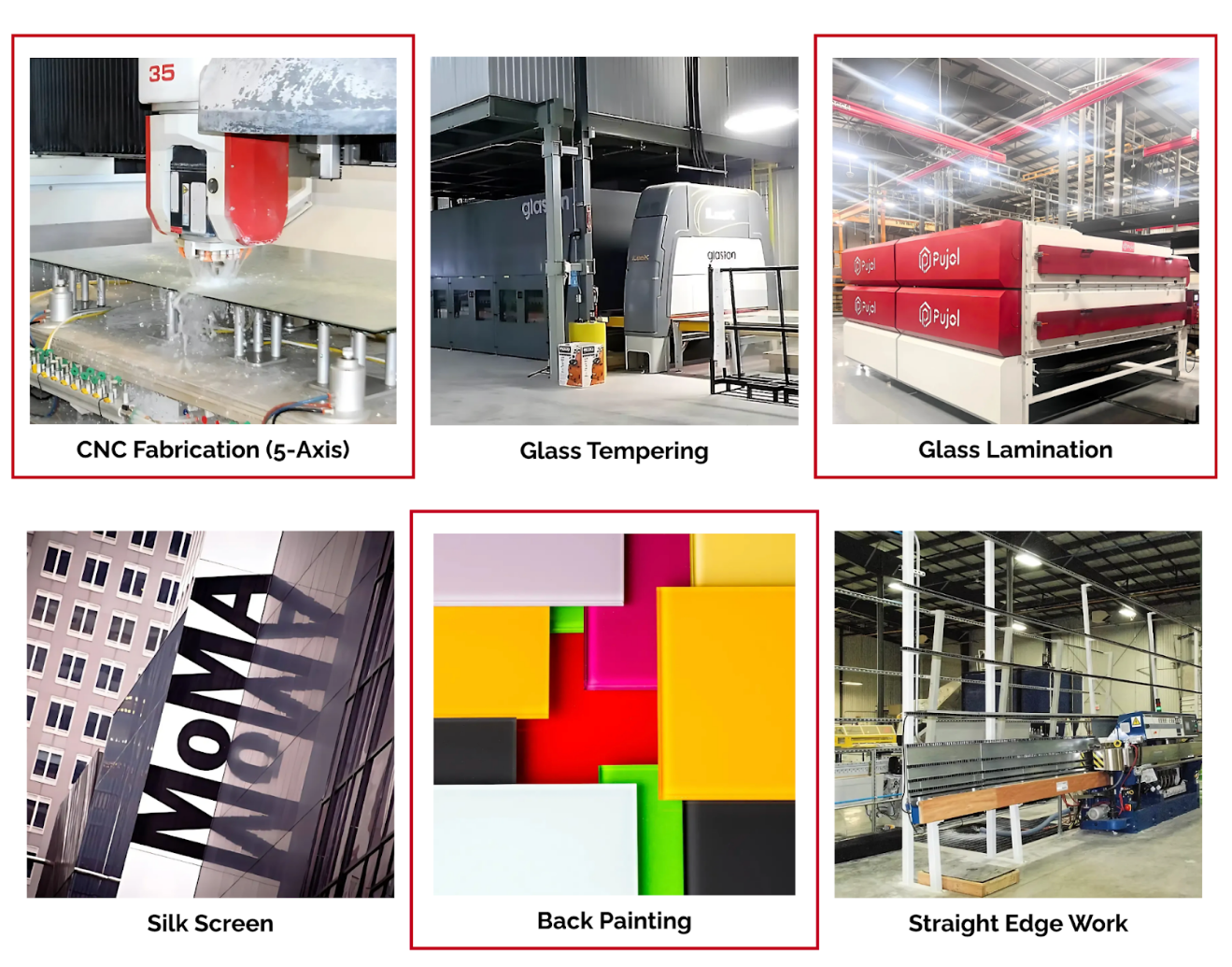
Fabrication is not installation, and it’s not mass manufacturing. It’s the process that transforms standard glass into project-ready components.
Why Glass Fabrication Impacts Commercial Projects
In commercial environments, even small fabrication inaccuracies can create major challenges during installation. Hole placement, cutouts, and edge tolerances all influence whether glass fits correctly on site.

Accurate glass fabrication helps ensure:
- Proper fit and alignment
- Predictable lead times
- Consistency across multiple panels
- Reduced on-site adjustments
When fabrication is handled correctly, installation becomes a controlled process rather than a problem-solving exercise.
Fabrication vs Manufacturing: Where Confusion Happens
Glass manufacturing focuses on producing glass at scale.
Glass fabrication focuses on customization, accuracy, and preparation.
This distinction matters because many project issues don’t originate during manufacturing. They occur during fabrication, where tolerances, sequencing, and processing decisions determine how the glass performs once installed.
Understanding the difference allows project teams to ask better questions earlier in the process and avoid assumptions that lead to delays later.
Why Fabrication Quality Matters
For OEMs and specifiers, fabrication quality affects more than appearance. It directly impacts installation efficiency, system compatibility, and overall project risk.
Reliable fabrication ensures glass arrives ready to integrate, not ready to be corrected.
Ready to Talk About Your Next Glass Fabrication Requirement?
If you’re planning a commercial project and want clarity around fabrication scope, tolerances, or production feasibility, having the right conversation early can make a measurable difference.
At BG Glass Technologies, we work closely with OEMs, designers, and manufacturers to support glass fabrication requirements that prioritize accuracy, consistency, and reliable timelines.
Whether you’re validating a design, refining specifications, or preparing for production, our team can help you assess the right fabrication approach before issues surface on site.
Reach out to BG Glass Technologies to discuss your project requirements